

Food processing is part of everyday life. Washing, grinding, cooking, drying, freezing and preserving all change food in different ways. Some methods improve safety and make ingredients easier to store or prepare, while others can reduce fibre, vitamins, minerals and other naturally occurring compounds. The difference matters when choosing what to eat.
Consider wheat flour: when whole wheat is refined into white flour, the bran and germ are removed, reducing its fibre and several nutrients. Yet processing does not always make food less nutritious. Cooking can improve the availability of certain nutrients, and fortification can restore selected vitamins and minerals. Understanding how food is processed helps us make better choices without assuming that every packaged or processed food is unhealthy.
1. What Happens to Food During Processing?
Food processing refers to the methods used to prepare, preserve, transform or package food. It can happen at home, in a local mill or in a large food manufacturing facility.
Common examples include:
-
Cleaning and washing: Remove dirt and unwanted material.
-
Grinding and milling: Turn grains, pulses and seeds into flour.
-
Cooking and heating: Improve safety, texture and digestibility.
-
Drying: Reduce moisture and help extend shelf life.
-
Freezing: Preserve food for later use.
-
Fortification: Add selected vitamins or minerals to improve nutritional content.
-
Refining: Remove certain parts of a food, such as the bran and germ from grains.
The nutritional effect depends on the ingredient and the method used. Processing should therefore be understood as a range of techniques, not a single category of unhealthy food.
2. Does Refining Grains Remove Important Nutrients?
Yes. Refining grains can reduce their natural fibre and nutrient content.
A whole grain contains three main parts:
-
Bran: The outer layer, which contains fibre and several vitamins and minerals.
-
Germ: The part that can grow into a new plant, containing fats, vitamins and other nutrients.
-
Endosperm: The starchy inner portion, which provides much of the grain's carbohydrate.
When wheat is refined to produce maida, the bran and germ are largely removed. This reduces the fibre and naturally occurring nutrients compared with whole wheat flour.
Some refined flour products are enriched or fortified with selected nutrients. This can restore certain vitamins and minerals, but it does not necessarily replace the fibre and full range of components removed during refining.
Whole grains vs refined grains
| Feature | Whole grains | Refined grains |
|---|---|---|
| Grain structure | Bran, germ and endosperm retained | Bran and germ largely removed |
| Fibre | Generally higher | Generally lower |
| Natural micronutrients | Retain more of the original grain's nutrients | Some nutrients are reduced |
| Texture | Can be coarser | Usually finer |
| Examples | Whole wheat, oats, jowar, bajra, brown rice | Maida, white rice, refined wheat flour |
Both types can be part of meals, but including whole grains regularly is a useful way to increase dietary fibre.
3. Are All Processed Foods Bad for Your Health?
No. This is one of the most important distinctions in nutrition.
Some processing methods help protect food quality, improve safety and make nutritious ingredients more convenient. Pasteurised milk, frozen vegetables, dried mushrooms, roasted pulses and cooked legumes are all examples of foods that undergo processing.
The concern is more relevant when a diet relies heavily on certain ultra-processed products that may contain high amounts of added sugar, salt or saturated fat and offer limited fibre.
The Indian Council of Medical Research–National Institute of Nutrition (ICMR-NIN) discusses different degrees of food processing in its Dietary Guidelines for Indians. Its guidance also highlights the importance of recognising foods that undergo extensive processing and may lose native fibre and nutrients.
The practical lesson is simple: look at the food's ingredients, nutritional profile and role in your overall diet rather than judging it only by whether it is packaged.
4. How Can Processing Affect Fibre, Vitamins and Minerals?
Different processing methods affect different nutrients.
| Processing method | Possible nutritional effect |
|---|---|
| Refining grains | Reduces fibre and removes some naturally occurring vitamins and minerals |
| Peeling fruits and vegetables | Can remove fibre and nutrients concentrated near the outer layers |
| Heating | Can reduce heat-sensitive vitamins, depending on temperature and cooking time |
| Drying | Removes moisture and concentrates nutrients per 100 g, but may reduce some sensitive vitamins |
| Freezing | Can help preserve nutrients and extend storage life |
| Fortification | Adds selected vitamins and minerals to improve nutritional content |
For example, eating a whole orange provides fibre from its pulp and membranes. Drinking clear orange juice generally provides less fibre because much of the pulp has been removed.
This does not mean juice can never be enjoyed. It simply means that whole fruit and fruit juice are not nutritionally identical.
5. What Is the Difference Between Processed and Ultra-Processed Food?
The term processed food covers a wide range of products. Ultra-processed foods are a more specific category commonly discussed using the NOVA food classification system.
These products are often made using industrial formulations and may contain ingredients or additives not commonly used in everyday home cooking.
Examples can include some packaged sweetened cereals, confectionery, instant snacks, sugary beverages and ready-to-eat products.
However, the presence of an additive does not automatically mean a food is unsafe or unhealthy. Additives have different functions and are regulated for permitted uses. The overall nutritional composition and how frequently a product is consumed also matter.
Research has found associations between higher consumption of ultra-processed foods and several adverse health outcomes. Much of this evidence is observational, so it is important not to treat every association as proof that one particular ingredient causes disease.
6. How Can You Make Better Food Choices in an Indian Kitchen?
You do not need to eliminate every packaged food or prepare everything from scratch. Start with practical changes that fit your routine.
| Instead of relying mainly on… | Consider including more often… |
|---|---|
| Maida-based everyday rotis or breads | Whole wheat or other suitable whole-grain options |
| Refined breakfast cereals | Oats, poha, dalia or millet-based preparations |
| Sugary packaged snacks | Fruit, roasted chana, nuts or seeds |
| Clear fruit juice | Whole seasonal fruits |
| Highly salted ready-to-eat snacks | Homemade roasted snacks with measured seasoning |
| Instant meals as the everyday default | Simple meals made with pulses, vegetables and grains |
These are not strict replacements. They are ideas for increasing variety and making everyday meals more balanced.
How can you apply this in everyday Indian cooking?
Try a few simple habits:
-
Mix different grains into your weekly meals rather than depending on only one cereal.
-
Include dal, chana, rajma, vegetables and seasonal fruits regularly.
-
Use whole-grain or millet flours where they suit the recipe.
-
Read ingredient lists and compare the added sugar, sodium and fibre content of similar products.
-
Choose convenient packaged foods thoughtfully, especially when they help you prepare a balanced meal.
For people following a gluten-free diet, choose grains and flours that are suitable for their dietary needs, and check for cross-contact risks during storage and preparation.
7. What Should You Check on a Food Label?
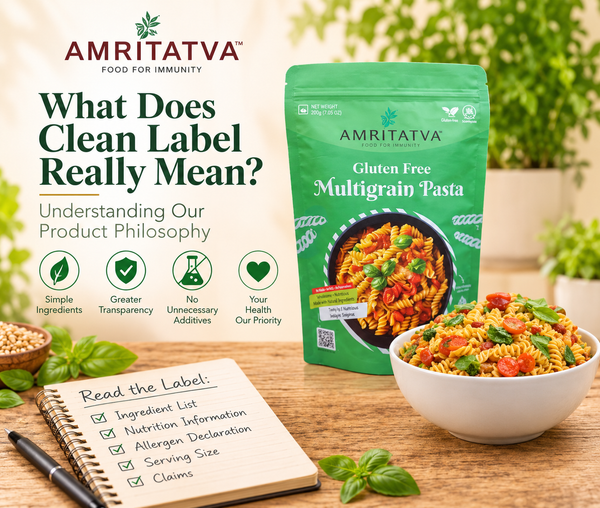
A food label gives you useful information about what you are buying. Rather than focusing only on the front-of-pack claims, turn the packet around and check:
-
Ingredient list: What ingredients are used, and which ones appear first?
-
Nutrition information: Compare energy, protein, carbohydrates, total sugars, added sugars, fat, saturated fat, fibre and sodium where declared.
-
Allergen declaration: Check for ingredients that may cause an allergic reaction.
-
Serving size: Understand whether the nutrition information is given per serving or per 100 g.
-
Food claims: Look for clear, relevant claims and check whether they are supported by the label and applicable standards.
A long ingredient list does not automatically mean a product is unhealthy. Likewise, a short ingredient list does not automatically make it nutritious. Context matters.
8. How Does Amritatva Approach Food Processing and Ingredient Transparency?
At Amritatva, we believe consumers should be able to understand the foods they choose.
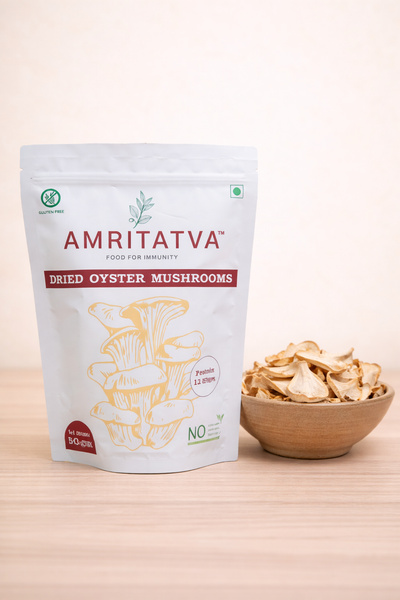
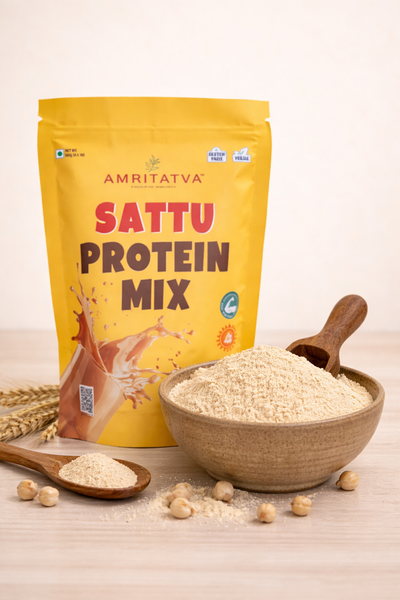
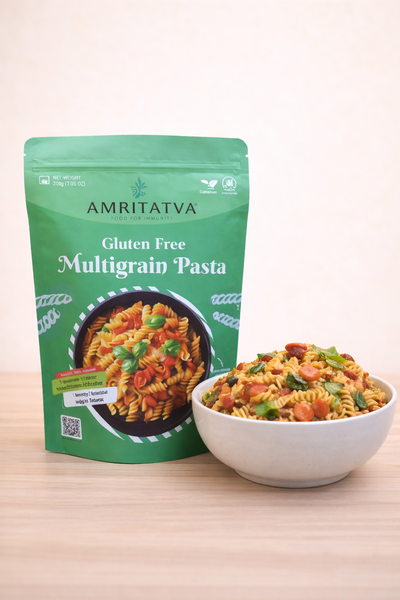
Our vegan and gluten-free range includes mushroom-based products, sattu mixes, gluten-free pasta and noodles, and seasonings. Different products require different preparation and processing methods to achieve their intended texture, flavour, safety and shelf life.
Our approach is to focus on ingredient transparency and help customers understand what goes into the products they buy.
We encourage consumers to:
-
Read ingredient lists before purchasing.
-
Check allergen and dietary declarations.
-
Compare nutrition information.
-
Choose products that suit their household's food preferences and requirements.
For us, thoughtful food choices are not about avoiding every form of processing. They are about understanding ingredients and making informed decisions.
Frequently Asked Questions
1. Does food processing always reduce nutritional value?
No. Processing can reduce some nutrients, preserve others or make certain nutrients more available. Refining grains removes fibre and some naturally occurring vitamins and minerals, while cooking can improve the digestibility of certain foods. Freezing and drying can also help preserve foods. The nutritional effect depends on the food and the processing method.
2. Why is whole wheat flour different from maida?
Whole wheat flour generally contains the bran, germ and endosperm of the wheat grain. Maida is refined wheat flour in which much of the bran and germ has been removed. As a result, whole wheat flour generally provides more dietary fibre and retains more of the grain's naturally occurring nutrients.
3. Are packaged foods always unhealthy?
No. Packaged foods include a wide variety of products, from plain frozen vegetables and roasted pulses to highly formulated snacks. Packaging can help protect food and extend shelf life. Check the ingredient list, nutrition information, allergen declaration and serving size to understand whether a product fits your dietary needs.
4. What are ultra-processed foods?
Ultra-processed foods are a category in the NOVA classification system. They are generally industrial formulations made with multiple ingredients and processing techniques. Some examples include certain packaged snacks, sugary drinks and ready-to-eat products. Not all packaged foods fall into this category, and the nutritional profile of each product still matters.
5. Does cooking destroy all vitamins and minerals?
No. Some heat-sensitive vitamins, such as vitamin C and certain B vitamins, can be reduced by cooking, depending on the method and duration. Minerals are generally more stable to heat, although some may be lost into cooking water. Cooking can also improve food safety and make certain nutrients easier to access or absorb.
6. How can I reduce ultra-processed food consumption without giving up convenience?
Keep convenient basics available: frozen vegetables, plain oats, pulses, nuts, seeds and suitable whole-grain ingredients. Prepare simple meals in batches when possible, and compare packaged products for added sugar, sodium, fibre and ingredient composition. The aim is to build a varied diet, not to follow an unrealistic rule that every meal must be homemade.
Final Thought
Food processing is not simply good or bad. It can make food safer, more convenient and easier to store, but certain methods can also remove valuable parts of an ingredient.
Understanding the difference between whole, refined and ultra-processed foods helps us make more informed decisions. Start with small steps: include more whole grains, pulses, fruits and vegetables, read food labels and choose packaged products thoughtfully.
At Amritatva, we believe better food choices begin with understanding what goes into our food.
References
-
ICMR–National Institute of Nutrition: Dietary Guidelines for Indians, 2024
-
Harvard T.H. Chan School of Public Health: Processed Foods and Health
-
American Heart Association: Whole Grains, Refined Grains and Dietary Fibre
-
World Health Organization: Food Fortification
0 comments