

Have you ever wondered why two carbohydrate-rich foods can affect your blood glucose differently? The Glycemic Index (GI) is a system used to rank carbohydrate-containing foods according to how much they raise blood glucose after eating. It can be a useful way to think about carbohydrate quality, but it is only one part of the nutrition picture.
GI is generally grouped into three categories: low GI is 55 or below, medium GI is 56–69, and high GI is 70 or above. But a food's GI does not tell you everything about a meal. Portion size, the amount of carbohydrate eaten, processing, cooking and what you eat alongside it can all affect the body's glucose response.
That makes GI less about finding a list of “good” and “bad” foods and more about understanding how different carbohydrate choices can fit into a balanced diet.
What exactly is the Glycemic Index?
The Glycemic Index is a ranking system for carbohydrate-containing foods.
It looks at the rise in blood glucose after consuming a standard amount of available carbohydrate from a food and compares that response with a reference food.
The scale runs from 1 to 100 according to the University of Sydney's GI system. Foods with a GI of 55 or less are classified as low GI, those from 56 to 69 as medium GI, and those at 70 or above as high GI.
In simple terms:
- Low GI: slower and smaller rise in blood glucose
- Medium GI: moderate response
- High GI: faster and higher rise
However, “low GI” does not automatically mean “healthy,” just as “high GI” does not automatically make a food unhealthy.
The whole food, portion, preparation and overall meal matter.
Why does GI matter?
Carbohydrates are an important source of energy, but different carbohydrate foods can produce different blood-glucose responses.
For example, Harvard's Nutrition Source lists whole oats and lentils among lower-glycemic choices, while refined foods such as white bread and some sugar-rich foods can have a higher glycemic impact.
This is one reason nutrition advice increasingly looks beyond simply asking:
“How many carbohydrates does this food contain?”
It can also ask:
“What type of carbohydrate is it, and how much am I eating?”
For people managing diabetes, this distinction can be particularly relevant. A 2021 systematic review and meta-analysis of randomized controlled trials found that lower-GI/GL dietary patterns produced a modest reduction in HbA1c compared with higher-GI/GL diets in people with diabetes.
That does not mean everyone needs to follow a strict low-GI diet.
It means GI can be one useful tool when making food choices.
What is the difference between GI and Glycemic Load?
This is an important distinction.
GI tells you about the quality of the carbohydrate in a food.
Glycemic Load, or GL, also considers the amount of carbohydrate in the serving you actually eat. The University of Sydney explains that GL combines carbohydrate quality with quantity.
Think about it this way:
A food could have a relatively low GI, but eating a very large portion still means consuming a substantial amount of carbohydrate.
So instead of looking only at a GI number, it makes more sense to consider:
Food + portion + preparation + the rest of the meal.
Are all millets low GI?
This is where nutrition information needs to be careful.
Millets are often discussed in the context of balanced diets, but it would be inaccurate to say that every millet is automatically low GI.
Different millet varieties, processing methods, cooking techniques and recipes can produce different glycemic responses.
The same principle applies to rice.
Harvard notes that the GI of rice varies considerably depending on the variety and processing, with reported values ranging from 48 to 93.
So rather than saying:
“Millets are always low GI.”
A more accurate approach is:
“Millets can be part of a balanced carbohydrate choice, but their GI varies by type and preparation.”
That is a much more useful message for everyday Indian cooking.
Which foods can be part of a lower-GI eating pattern?
You don't need to search for exotic ingredients.
Many familiar foods can fit into a lower-GI eating pattern.
Examples include:
- Lentils and dals
- Chickpeas and other legumes
- Whole oats
- Some whole grains
- Non-starchy vegetables
- Nuts and seeds
- Selected fruits
- Certain minimally processed carbohydrate foods
Harvard's nutrition guidance lists lentils and beans among foods with low glycemic load, while whole oats and some whole-grain foods can have lower or moderate glycemic impacts depending on the serving and preparation.
The emphasis should be on variety, rather than turning one food into a “superfood.”
Does low GI mean better for everyone?
Not necessarily.
GI is a nutritional tool, not a complete measure of food quality.
For example, a food can have a low GI but still be highly processed or contain relatively little protein, fibre or micronutrients.
Similarly, a food with a higher GI can still provide useful nutrients and can be part of a balanced meal.
Your overall dietary pattern matters more than one number printed next to one ingredient.
If you have diabetes, prediabetes or another condition requiring blood-glucose management, dietary choices should ideally be personalised with a qualified healthcare professional.
Can low-GI foods help with energy and cravings?
This needs a little nuance.
Lower-GI foods generally produce a smaller rise and fall in blood glucose compared with higher-GI foods.
That can make them useful when planning meals, particularly when combined with other nutritious foods.
But it would be too strong to promise that low-GI foods will automatically prevent cravings, improve concentration or provide “sustained energy.”
Hunger and energy are influenced by many factors, including total food intake, sleep, physical activity, meal composition and individual differences.
So think of GI as one piece of the meal-planning puzzle.
How can you make lower-GI choices in an Indian kitchen?
You don't need to completely change the way you eat.
Instead, look at how you build familiar meals.
For breakfast
Instead of relying entirely on refined flour-based breakfast foods, consider options such as:
- Vegetable besan chilla
- Dal-based preparations
- Oats with nuts and seeds
- Vegetable poha with a source of protein
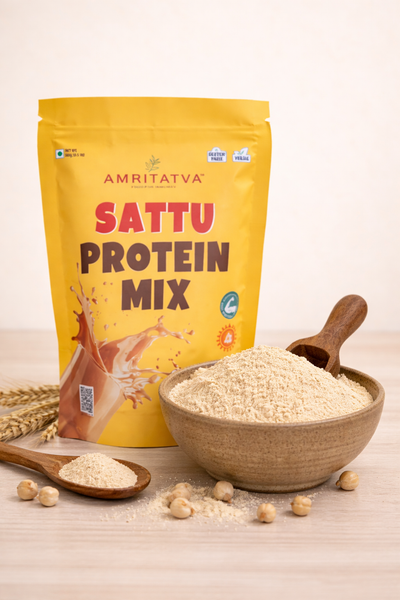
- Sattu-based preparations
For lunch
Build your plate around familiar combinations:
Dal + vegetables + roti/rice + salad
The dal and vegetables add fibre and protein, while portion size and the type of grain contribute to the overall carbohydrate load.
For dinner
A simple meal such as:
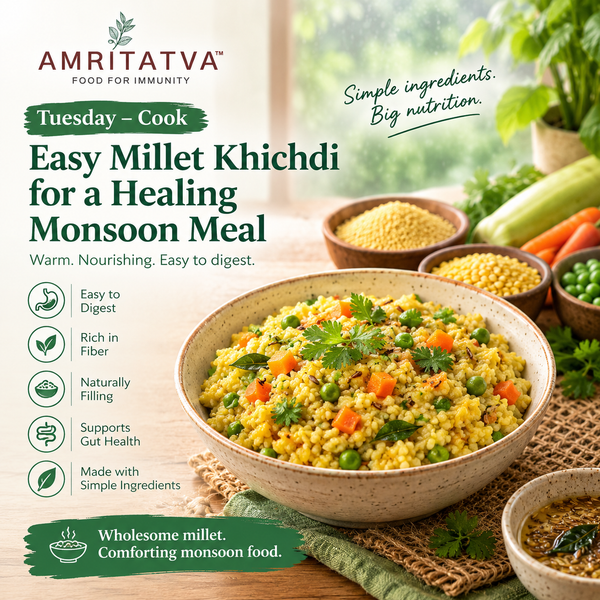
Khichdi + vegetables + curd or a suitable plant-based accompaniment
can be more balanced than focusing on one carbohydrate food alone.
For tiffin
Try combining a carbohydrate source with protein and vegetables rather than packing a refined carbohydrate snack by itself.
For example:
Sattu-based snack + vegetables/fruit
or
Dal-based chilla + chutney + vegetables.
How can you use sattu in a balanced meal?
Sattu is familiar across many Indian households and can be used in several ways.
You can prepare a savoury sattu drink with water, lemon, roasted cumin and herbs.
You can also use sattu in:
- Stuffed roti or gluten-free flatbread preparations
- Chilla-style recipes
- Savoury snack mixes
- Paratha fillings
- Simple breakfast bowls
The important point is that sattu should not be treated as a magic “low-GI food.”
Instead, look at the complete meal.
A meal containing sattu, vegetables and other nutritious ingredients may provide a different nutritional profile from a meal made mainly from refined flour.
Amritatva vs. a typical refined-flour snack
| Factor | Amritatva-style approach | Typical refined-flour snack |
|---|---|---|
| Main focus | Familiar, value-added ingredients | Often centred around refined flour |
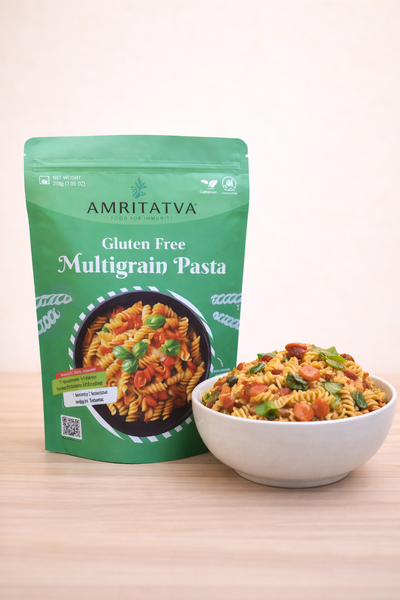
| Gluten-free options | Gluten-free products available | May contain wheat |
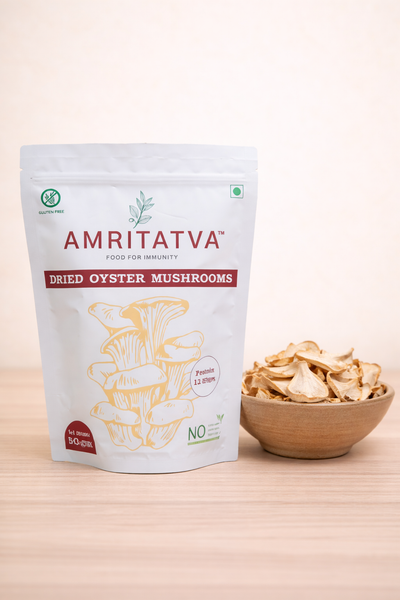
| Ingredient approach | Sattu, mushrooms, millets and other familiar ingredients | Depends on the product |
| GI consideration | Should be assessed from the complete formulation | Can vary significantly |
| Meal planning | Designed to fit into balanced meals | Often eaten as a standalone snack |
| What matters most | Overall ingredients, portion and meal composition | Overall ingredients, portion and meal composition |
Note: This is not a claim that every Amritatva product has a low GI. A product should only be described as “low GI” if its formulation and appropriate testing substantiate that claim.
Does cooking change the glycemic response?
Yes, preparation matters.
Processing, cooking and food structure can influence how quickly carbohydrates are digested and absorbed.
This is one reason why you should not assume that a raw ingredient and every preparation made from it will have the same GI.
For example, the form of a grain, how finely it is processed, cooking time and the ingredients combined with it can all affect the final meal.
This is another reason why “low-GI food lists” should be used as guidance rather than rigid rules.
What is the simplest way to use GI in everyday eating?
You don't need to calculate GI for every meal.
Instead, start with a few practical habits:
Choose more whole or minimally processed carbohydrate foods.
Include pulses and legumes regularly.
Add vegetables to your meals.
Pay attention to portions.
Combine carbohydrates with protein, fibre and other nutritious foods.
Reduce your dependence on highly refined and sugary foods.
And most importantly:
Look at the entire meal, not just one ingredient.
Healthy eating does not require extreme rules.
Sometimes it means making one small improvement to a familiar meal.
Frequently Asked Questions
What is a good glycemic index number?
A GI of 55 or below is generally classified as low, 56–69 as medium and 70 or above as high. These categories help describe how a carbohydrate-containing food affects blood glucose compared with a reference food. However, GI is not a complete measure of nutritional quality, and portion size and the rest of the meal also matter.
Are millets low GI?
Not all millets should automatically be called low GI. Their glycemic response can vary depending on the millet variety, processing, cooking method and recipe. Millets can certainly be part of a balanced Indian diet, but it is more accurate to consider the specific food and preparation rather than applying one GI value to every millet-based dish.
Is low GI food better for people with diabetes?
Lower-GI eating patterns can be useful for people with diabetes as part of an overall dietary strategy. A systematic review of randomized trials found modest improvements in glycemic control with lower-GI or lower-glycemic-load diets compared with higher-GI diets. However, diabetes nutrition should be individualised, and GI should not replace advice from a qualified healthcare professional.
Does low GI mean the food is healthy?
No. GI measures the effect of carbohydrate-containing food on blood glucose; it does not measure all aspects of nutrition. A food's fibre, protein, fats, micronutrients, degree of processing, portion size and overall dietary context also matter. A better approach is to use GI as one consideration alongside the overall nutritional quality of your diet.
Is white rice always high GI?
No. Rice does not have one universal GI value. Different varieties and processing methods can produce different results. Harvard's Nutrition Source notes that reported GI values for rice range widely. Therefore, it is better to consider the specific variety, preparation and serving rather than describing all rice as either high or low GI.
Does low GI food prevent blood sugar spikes?
Lower-GI foods generally produce a smaller and slower rise in blood glucose than higher-GI foods, but the actual response depends on the portion, meal composition, preparation and individual physiology. A lower-GI choice can therefore be useful, but it does not guarantee that blood glucose will remain completely stable after eating.
Understanding GI Without Overcomplicating Food
The Glycemic Index can teach us something useful:
Not all carbohydrates behave the same way.
But it does not mean we need to label every food as “good” or “bad.”
Indian kitchens already offer a wide variety of pulses, grains, vegetables, nuts and seeds that can be combined into balanced meals.
The practical approach is simple:
Choose thoughtfully.
Balance your plate.
Watch portions.
Keep variety in your diet.
At Amritatva, we believe nutrition education should make everyday food choices easier—not more complicated.
Understand your food. Build balanced meals. Make choices that fit real life.

0 comments